


California DMV, 20,000 CDLs, and a Lawsuit That Raises Bigger Questions
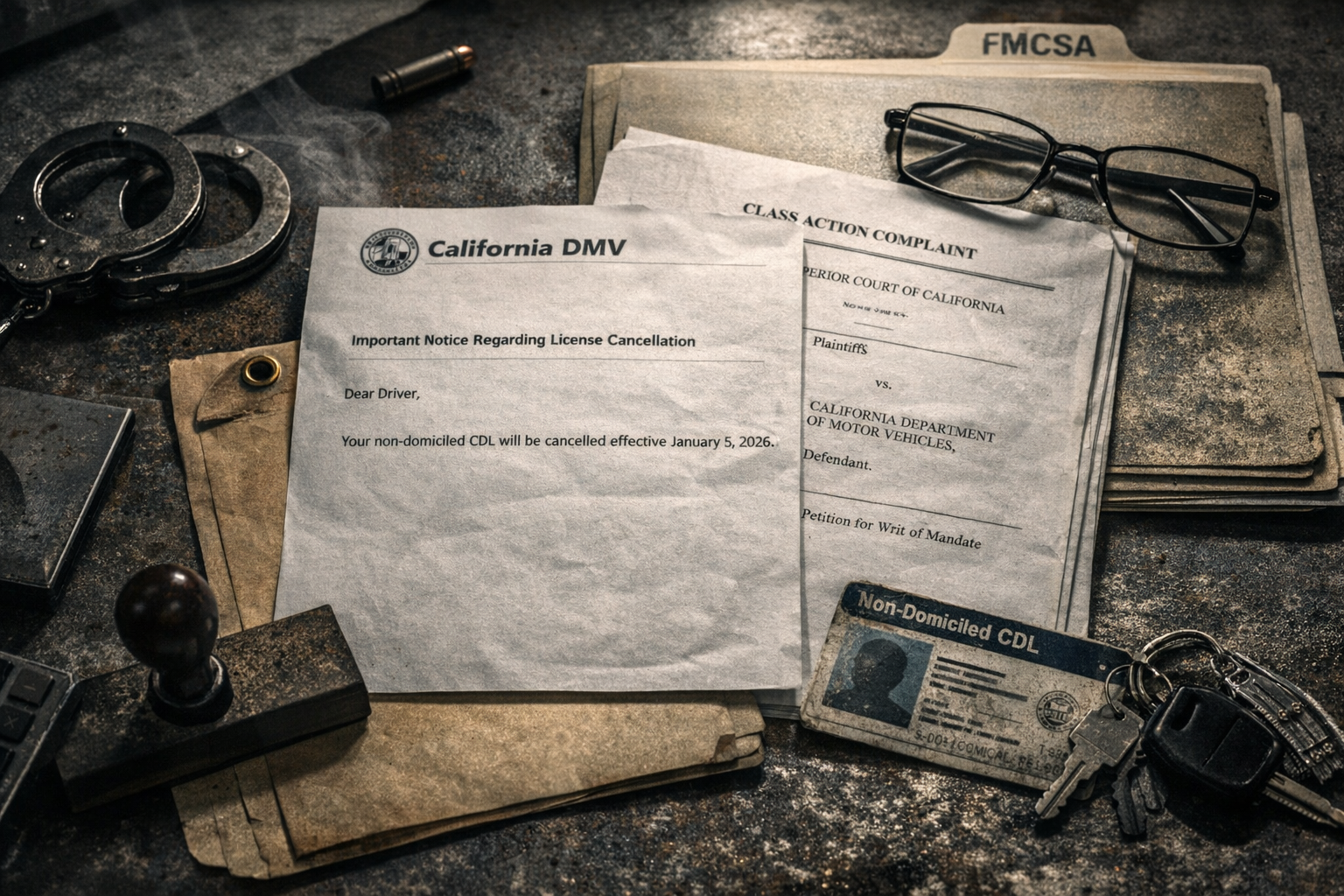
California is preparing to cancel nearly 20,000 non-domiciled Commercial Driver’s Licenses, and now a class action lawsuit is trying to stop it. But this situation didn’t begin with a lawsuit — it began with audits, compliance failures, and a breakdown between state and federal agencies.
This post summarizes the key points from our latest Road Logic video and breaks down what the lawsuit actually claims, where it’s strong, and where the arguments begin to strain.
This is a Black Box breakdown — meaning it’s built on official filings, statutes, and agency records, not headlines or social media narratives.
What Triggered the Lawsuit
According to the filing, the California DMV sent letters on November 6, 2025, notifying 17,299 non-domiciled CDL holders that their licenses would be canceled on January 5, 2026. A second round of letters went out in mid-December to roughly 2,700 additional drivers, with cancellations scheduled for February.
The DMV’s reason:
The expiration dates on these CDLs did not match the expiration dates of the drivers’ work authorization or legal presence documents, as required under California regulations.
Importantly, this was not initially a federal law issue. California’s expiration-alignment requirement is more restrictive than federal CDL rules, and the DMV later admitted that internal system shortcomings caused thousands of licenses to be issued with incorrect dates.
What the Plaintiffs Are Arguing
The lawsuit — filed by the Sikh Coalition and the Asian Law Caucus — makes three core arguments:
1. DMV Has a “Ministerial Duty” to Allow a Fix
Under California Vehicle Code §13100, a license cancellation must be “without prejudice,” meaning the driver must be allowed to immediately apply for a corrected license.
The plaintiffs argue the DMV canceled CDLs but then blocked any path to reapply, turning a cancellation into an indefinite shutdown.
2. Due Process Was Denied
The filing argues that a CDL is a property and liberty interest because it is directly tied to a driver’s livelihood. The lawsuit claims drivers were given no meaningful way to:
- Contest DMV determinations
- Review evidence used against them
- Present updated documentation
3. DMV Exceeded Its Authority
By canceling licenses and refusing reissuance, plaintiffs argue the DMV effectively imposed a revocation with prejudice, which requires stricter legal standards and procedures than cancellation.
Where the Lawsuit Is Strong
The strongest part of the case is not emotional hardship — it’s process failure.
The filing highlights:
- At least one driver whose CDL expiration date already matched his work authorization but was still flagged
- A lack of clear methodology explaining how the DMV determined which licenses were “non-compliant”
- Conflicting guidance from DMV field offices
When errors are acknowledged and livelihoods are at stake, courts tend to scrutinize how decisions were made, not just why.
Where the Case Becomes Vulnerable
The lawsuit also has pressure points.
The biggest one is this:
The plaintiffs rely heavily on the phrase “immediately apply”, while the DMV claims it is currently unable to issue non-domiciled CDLs due to federal compliance issues and corrective plans tied to FMCSA oversight.
That creates a direct legal conflict:
- State law says cancellation must allow immediate reapplication
- DMV argues federal pressure prevents issuance
A judge may ultimately have to decide whether a state statute can compel action when an agency claims its authority is constrained by federal compliance consequences.
Another vulnerability is class complexity. Individual drivers have different issuance histories, renewal dates, and document timelines, which may complicate a one-size-fits-all remedy.
The Most Important Contradiction
One of the most revealing aspects of the filing is an alleged contradiction in DMV messaging.
Publicly, the DMV has stated it cannot issue corrected non-domiciled CDLs due to FMCSA non-compliance concerns. But in communications with FMCSA, the DMV reportedly argued that California’s expiration-date issue was not a violation of federal law and should not justify federal funding penalties.
If true, that inconsistency raises questions about whether federal pressure is being used as justification for a state-level failure to implement a fix.
What Happens Next
This case is not about payouts. It’s about whether the DMV can:
- Admit error
- Cancel licenses
- And leave drivers without a viable path to regain legal driving status
The court’s focus will likely be narrow but critical: process, authority, and due process, not politics.
Road Logic will continue tracking filings, court rulings, and any DMV policy changes as this unfolds.
Chaos on the road… logic behind the wheel.
— Road Logic
Watch the full video:
20,000 Drivers vs the DMV: Why This Lawsuit Might Fail
Road Logic is an independent trucking information platform focused on safety, compliance, enforcement, and accountability.
We are not a breaking-news outlet, a review site, or an opinion channel. Road Logic exists to explain how trucking systems actually work — what the rules say, how they’re enforced, where they fail, and what that means for drivers, trainers, and carriers.
In an industry flooded with headlines, speculation, and misinformation, Road Logic prioritizes clarity over speed and accuracy over clicks.

Leave a Comment